Education & Stewardship
Plain teaching, then a first step
These resources are written for families, classrooms, congregations, neighborhood groups, and crews. Each topic explains why it matters and ends with something you can do this week.
Resource topics
Nine starting places
Use them for a class, a Sunday lesson, a newsletter, or a crew briefing. Print-friendly guides and downloadable checklists are being prepared for each topic.
Why litter matters
Litter is not only ugly. It teaches. A neglected lot invites more dumping, while a cleaned one tends to stay cleaner. Litter also breaks down into the soil and water, traps and injures wildlife, and clogs the drains that keep streets from flooding.
First step: Walk one block and count what you see. Come back after you clear it, and count again in a month.
Why creeks and watersheds matter
Everything that lands on a street, lawn, or parking lot eventually reaches a creek. A watershed is simply all the ground that drains to the same water — which means yard chemicals, oil, and loose trash are water problems, not just ground problems.
First step: Find out which creek your street drains to. Learn its name. That one fact changes how a neighborhood behaves.
Recycling and waste reduction
Recycling is the last step, not the first. Reducing what enters the house, reusing containers, repairing instead of replacing, and composting kitchen and yard scraps remove far more waste than sorting ever will.
First step: Weigh or eyeball one week of household trash, then remove the single largest category from it.
Urban wildlife awareness
Cities are full of animals living quietly at the edges — birds, turtles, herons, opossums, foxes, frogs, and countless insects. Most conflict comes from unsecured trash, loose pets, and destroyed cover, all of which people control.
First step: Identify five wild species on your own street. Protect the cover they use rather than tidying it away.
Pollinators and habitat
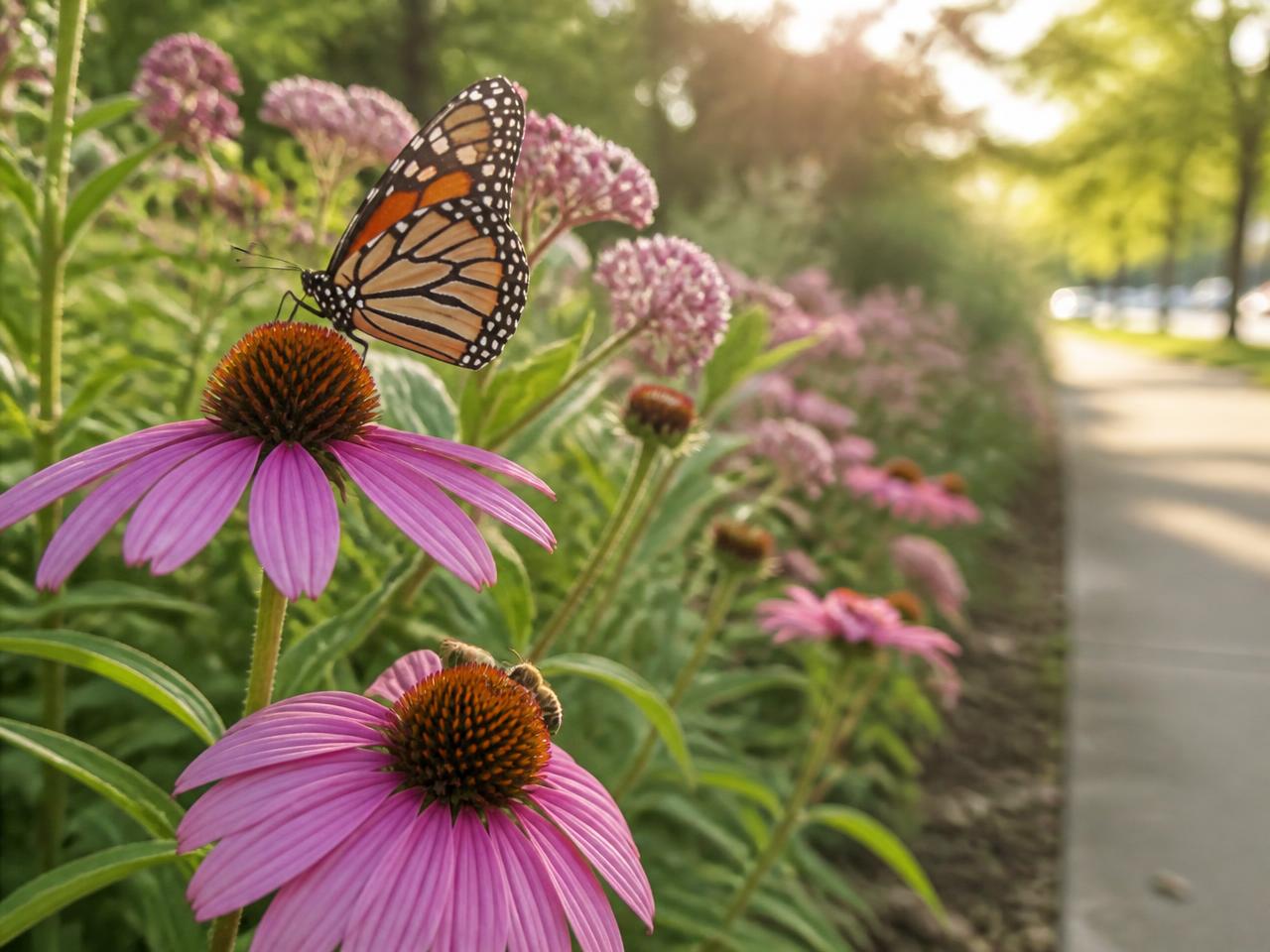
Roughly a third of what we eat depends on pollinators, and they need blooms across the whole season, not one week in spring. Bare, sprayed, closely-mown ground is a desert to them; a small strip of native flowers is an oasis.
First step: Leave one margin unmowed and plant a few native blooms in it. Skip the spray entirely.
Small gardens and food resilience
Food resilience does not require acreage. Containers, a raised bed, a rooftop, or a shared plot can supply real food and teach real skills — soil, water, seasons, and patience.
First step: Start with two containers of something you actually eat. Success here is a habit, not a harvest.
Community cleanup planning
Good cleanups are planned: one defined place, a date, a meeting point, permission where needed, gloves and bags counted, sharps and heavy-item rules agreed, disposal arranged before you start, and water for the crew.
First step: Pick a place small enough to finish. Finishing is what brings people back next time.
Responsible neighborhood stewardship
Stewardship is ownership without title: watching the drains, the creek stretch, the trees, and the empty lot near you, and reporting or repairing what you find before it compounds.
First step: Adopt one specific thing — a drain, a block, a bank, a bed — and check it monthly for a year.
Quiet practical service
Much restoration is done best without an audience: a neighbor's yard, a cleared path, a hauled-off pile, a fence mended. The work is the point, and the absence of applause keeps it honest.
First step: Do one useful thing this week that nobody will know to thank you for.
For teachers and leaders
Bring a lesson, leave with a project
Education here is not meant to end at information. Every topic is designed to attach to a small, finishable project a group can carry out locally.
- Classroom or youth-group lesson paired with a schoolyard or creek project
- Congregation service day built around one topic and one place
- Neighborhood association briefing on drains, dumping, and creek watch
- Family habits: recycling, composting, containers, and pollinator margins